My friend Ken Schultz recently wrote an insightful comment about power grid vulnerability on a Gatestone Institute article, and I thought that it would be worth sharing here.
Ken Schultz – June 7, 2025
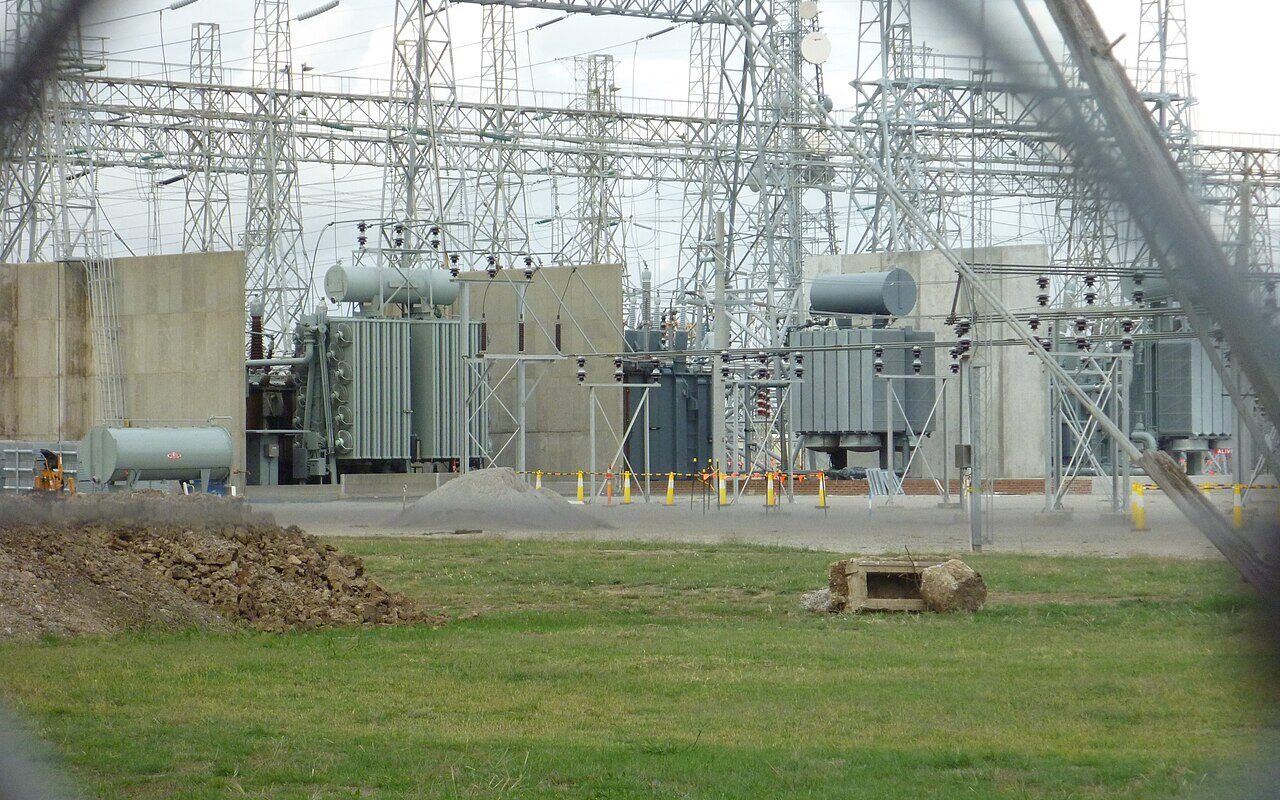
“It would be interesting to see how much foreign owned land is in the vicinity of the electricity grid’s high voltage transformers. Armed drones would only need to disable ten or so of these transformers, which according to a Congressional Report could bring down the entire grid through cascading failure.
Some of these transformers weigh hundreds of tonnes and could take months to replace.
Such an attack would bring America to its knees It could disable the power grid for weeks, if not months, until the transformers were replaced. Without electricity, there would be no banking, financial activity, communications, fuel, transportation, water, and, after a few days, no food.
In my opinion, an attack on a number of high voltage transformers by armed drones launched in the near vicinity of the transformers represents one of the greatest threats to Western nations. As I said in my opinion piece, if it knocked out the electricity grid for an extended time, it would bring the attacked nation to its knees. There would be absolute chaos, pandemonium and multiple deaths. In the worst case, it could send the attacked nation back to the pre-industrial age.
It is not even necessary to acquire property in the vicinity of the transformers. A truck could pull up within the line of sight of a transformer and launch multiple drones.
It behooves authorities in all jurisdictions to take steps to protect their high-voltage transformers.”
Ken’s book Is it Too Late to Save the West? is a great read, and well-worth a look if you are concerned about the future of Western civilisation. You can purchase it through Amazon.
Regards,
Ron Manners AO
1 Comment
Energy Security Is National Security — And It’s Time We Fund It Like It Is
By Peter Iancov
As Australia rightly reassesses its defence posture in an increasingly uncertain geopolitical environment, one fact is often acknowledged but rarely acted upon: our national energy infrastructure is a critical vulnerability — and yet, it remains structurally under-defended.
We speak often of submarines, fighter jets, drones and cybersecurity — and rightly so. But what happens when the gas compression stations that keep our eastern seaboard warm are digitally compromised? Or when key transmission substations are disabled or worse destroyed? Do people realise that repairs, if possible at all can take 3-6-12 months? And that not spare equipment is available and supply chains unblocked.
What’s the plan when distributed energy resources are hijacked in coordinated denial-of-service-style attacks on the grid?
Do we have a credible answer? I would very much doubt that. And, if I’m right ( honestly I prefer to be wrong) that is a national failure.
Mrs. Rinehart is proposing 5% of GDP on Defence — and I agree. But how much of that is spent on Energy Protection? Probably not even calculated.
Australia is currently on track to lift its defence spending to 2.4% of GDP, with growing bipartisan consensus that it should climb to 3% or more. I’m always curious to find out what’s the science behind those numbers…. Copying other countries is not science especially when they are more equipped than we are. I would support Gina Rinehart’s view that it needs to be closer to 5%, if we are serious about sovereign resilience in an era of contested supply chains, energy coercion, and cyber warfare. Is 5% enough? Probably not but much better as a starting position.
But even more pressing is what’s within that spend. Less than 1% of defence expenditure appears earmarked for energy-specific defence — and even that is diluted across cyber agencies, regulatory consultations, and public-private committees and consultants that prepare good looking PowerPoint slides attempting to make their masters look good.
We don’t need to look good. We must be good.
I would propose that 1% of total GDP defence spend — or roughly 0.05% of GDP — be directly allocated to hardening, automating and securing our electricity and gas infrastructure. This would represent a strategic investment of approximately $1.5–2 billion annually — not a huge sum, but one that could decisively change the game.
What Needs to Happen?
This isn’t about building solar panels, wind mills or funding the energy transition. This is about safeguarding what already exists — the physical and digital backbone that keeps our society functioning. The focus must be:
-Physical Hardening: Secure perimeter control, blast-proofing and emergency redundancy for critical nodes in gas pipelines and HV substations.
-Automation with Integrity: Deploying trusted-edge automation with AI/ML models trained on real failure modes — not theoretical ones — to enable autonomous response in milliseconds when cyber-physical anomalies are detected.
-Segmented Cyber Defence: Moving away from centralised, cloud-vulnerable control systems towards distributed, fortified energy network architectures that resist cascading failures.
-Capability-Driven Workforce: And perhaps most importantly, the people responsible for this national security work must be energy literate. This is not a job for smart but generalist and well intended people or policy consultants. It requires engineers, technicians, system network operators operators and infrastructure strategists and planners who understand the energy system down to its smallest packet of electrons and gas molecules.
Why Are We Still Just Talking? We Must Talk Less and Do More.
There’s been no shortage of taskforces, strategy papers, conferences and “trusted information sharing” forums. Yet, the rate of actual on-the-ground capability uplift is glacial. In contrast, other countries are well advanced in protecting their own source of life – energy – whilst some others not so well intended are testing grids, including ours, constantly. They are probing, scanning, and reverse-engineering the architecture of our national energy system right now unless they already finished few years ago.
We must treat our energy networks as the fifth pillar of defence, alongside land, sea, air and cyber. Not just a commercial or regulatory asset, but a critical national asset — and one that demands the same strategic investment and urgency as a fleet of fighter jets.
A Call to Action
Australia cannot afford to sleepwalk into the next crisis — whether cyber, kinetic, or hybrid — with an unprotected energy backbone. We must invest with discipline, speed and deep technical competence. That means real funding, real engineering talent, and a clear-eyed acknowledgement that energy security is national security.
If 5% of GDP is the right number for defence, then 1% of that must go toward safeguarding the networks that power the nation — literally.
Best,
Peter Iancov
Chronos Advisory Pty Ltd